

- HOME
- Taxes & compliance
- When does a side hustle become a taxable business in the UK?
When does a side hustle become a taxable business in the UK?
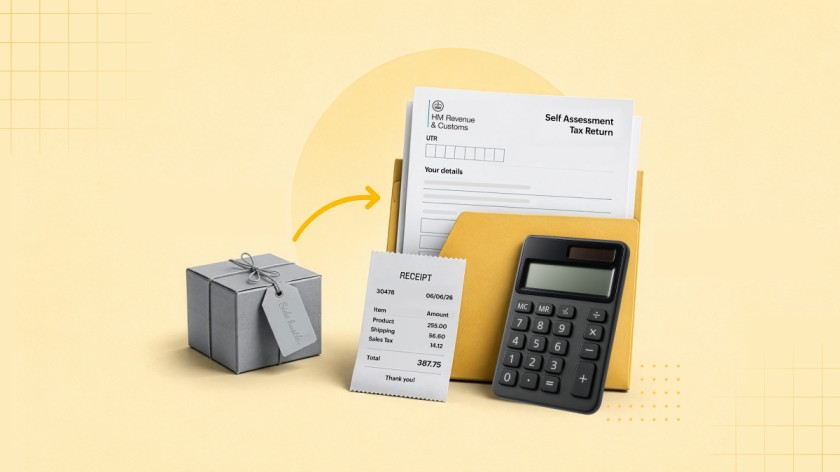
You started doing artwork in your free time and listed them for sale on Etsy. You sold out faster than you expected. You sourced more materials to create more art so you could sell more. A few months later, you get busy with this routine and find yourself checking your phone for orders before you have had breakfast. Somewhere in that transition from a hobby to running a small operation, you crossed a line HM Revenue & Customs (HMRC) cares about, even if nobody sent you any notice conveying that.
This is the question that hits more people later than you would think: When does my side hustle stop being a hobby and becomes a business that HMRC expects me to declare? The most accurate answer is that there is no single line where the bell rings when you cross it. But there is a clear framework set by the HMRC, and once you know it, there is clarity.
The magic number: £1,000
ou can earn up to £1,000 per tax year through your side hustle before you have to inform the HMRC about your business. This limit is called a trading allowance and you can consider it a tax-free allowance up to which you don't need to report to HMRC. The trading allowance is a measure of your gross income and not the profit you make.
Sold an old cycle for £150? Did a freelance gig for £250? You are comfortably off HMRC's radar. Cross £1,000 and the picture changes, even if your actual profit was tiny. If you earned £1,500 and spent £900 to make that, HMRC still wants to know as the trading allowance is measured on what you earned and not on what you realized.
But here's the part that surprises people: The £1,000 figure isn't really the test for whether you are a business. It's just the point at which you are required to say so.
The HMRC's badges of trade
Since there's no single legal definition of "a business," HMRC relies on a set of indicators known as the badges of trade. No single one settles the matter on its own. HMRC looks at the overall pattern.
Here are a few of the ones that matter most in practice:
Are you doing it to make a profit? Buying something with the sole objective of selling it, rather than because you wanted it, is a strong signal.
How often are you doing it? A one-off sale of your own belongings looks very different from repeated, similar transactions month after month.
Have you changed or improved what you are selling? Buying second-hand clothes and altering them before resale points towards trading. Selling your own coat because it doesn't fit anymore doesn't.
Do you behave like a business? Keeping track of what you bought, what you sold, pricing things strategically, promoting your products on social media platforms, sourcing stock in bulk—these all come under business activity.
Where did the item come from? Something you inherited or were given is treated differently from something you actively bought to sell.
Picture two people selling on an ecommerce platform. One occasionally lists out an item they no longer need. The other actively buys craft supplies specifically to make items for sale, posts regularly, and reinvests the proceeds into more stock. HMRC doesn't worry about the former but would need more details on the latter.
Marketplaces are watching too
If you sell through online platforms like eBay, Etsy, Vinted, or similar marketplaces there is another layer worth understanding. As per the new rules that came into effect in 2024, online platforms and marketplaces are mandated to report seller activity to HMRC once they cross a certain limit. This currently stands at 30 transactions or £1,700 in sales, in a year.
That data lands with HMRC automatically. Marketplaces are required to share the data with you as well. It doesn't mean that you owe tax. Taxation is still decided by the badges of trade and trading allowance.
So you have decided you are trading. Now what?
If your activity gets classified as a business, as per the badges of trade, or if your gross income has exceeded the £1,000 limit, the next step is registering yourself as self-employed with HMRC. This is followed by the Self Assessment return. You generally need to register by 5 October following the end of the tax year in which you exceeded £1,000. For example, if you earned more than £1,000 during the 2026/27 tax year, you need to register by 5 October 2027.
From there, it is recommended that you keep a clean record of all your income and expenses. Allowable expenses like materials, platform fees, and more can help in bringing down your taxable profit. As a self-employed person, this is a benefit you wouldn't want to miss.
The next threshold on the horizon: VAT
Once your turnover, not profit, passes £90,000 in any rolling 12-month period, value added tax (VAT) registration becomes compulsory. It's a different threshold for a different purpose, and it applies to sole traders exactly as it does to limited companies. It's recommended to keep an eye on it if your side hustle is genuinely taking off.
Once you notice your sales are growing and you want to keep earning more, take that as your cue to start your accounting process. Maintain proper income records, keep note of all expense receipts, and maintain a separate bank account for business-related transactions. All of these will help you manage your side hustle easier.
This is exactly where a tool like Zoho Books comes in. It tracks every sale and expense as it happens, so you always know where you stand against the £1,000 threshold, and if your side hustle does turn into the real thing, your records are already in the shape HMRC expects. Explore Zoho Books plans and pricing for the UK to see which features work best for your business.
